The Mauritius Freeport is a trade and logistics zone offering business and investment opportunities in warehousing, distribution, processing, manufacturing and re-export activities.
Its customs advantages, strategic location and access to international markets make it particularly relevant to foreign investors seeking a base for trade between Africa, Asia and the Indian Ocean region.
Key Takeaways
- The Mauritius Freeport supports international trade, logistics and re-export activities.
- Opportunities include warehousing, distribution, processing, manufacturing and logistics.
- Qualifying Freeport activities may receive preferential tax and customs treatment.
- Foreign investors can own and establish eligible Freeport businesses, subject to licensing and regulatory requirements.
My contact details are hello@adamfayed.com and WhatsApp +44-7393-450-837 if you have any questions.
We offer bespoke structuring solutions tailored to your situation and have business interests in Mauritius, including relationships with locally licensed advisors.
The information in this article is for general guidance only, does not constitute financial, legal, or tax advice, and may have changed since the time of writing.
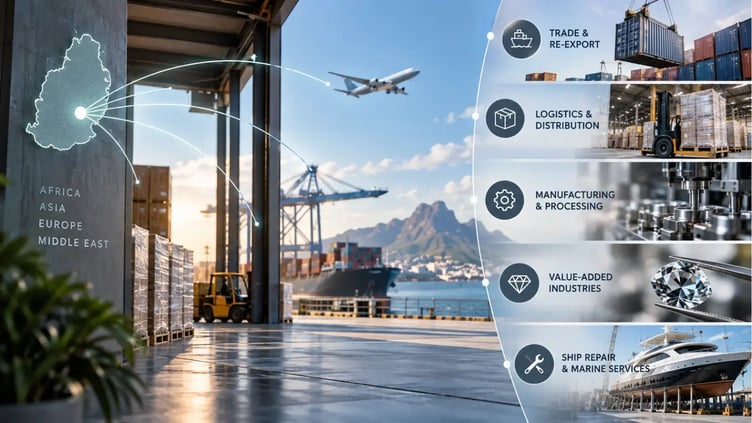
What is Mauritius Freeport?
The Mauritius Freeport is a designated free trade zone established to support international trade and logistics activities.
Operating primarily around the Port Louis harbor area, it provides facilities for activities such as warehousing, storage, processing, manufacturing, assembly and re-export.
Businesses can bring goods into the zone for approved activities before either re-exporting them or, where permitted, moving them into the Mauritian domestic market under the applicable customs procedures.
The Freeport is primarily designed for international trade and trade-related business activities, rather than businesses focused exclusively on the Mauritian domestic market.
Why invest in the Mauritius Freeport?
The Mauritius Freeport is attractive to investors because it combines customs advantages, strategic access to international markets, port infrastructure and a well-established business environment for trade-focused businesses.
Strategic location
Mauritius sits along shipping routes connecting Africa, Asia and the Indian Ocean, making it a practical base for receiving, storing, processing and redistributing goods.
For companies expanding into African markets, this can provide a regional base without requiring separate infrastructure in every target market.
Port and logistics infrastructure
The Freeport is connected to Mauritius' port facilities and provides warehouses, storage facilities and other infrastructure for international trading operations.
This is particularly useful for businesses that need to hold, process or move goods through Mauritius before sending them to other destinations.
Customs advantages
The Freeport's special customs regime allows qualifying goods to be imported for permitted activities without being treated in the same way as goods entering Mauritius' domestic customs territory.
This can reduce customs costs for businesses involved in international distribution, processing and re-export.
Access to regional markets
Mauritius has established commercial links with African markets and a network of international trade and investment agreements.
A Freeport operation can therefore support a broader regional expansion strategy rather than relying on Mauritius' relatively small domestic market.
Established international business environment
Mauritius has a developed financial and corporate services sector that supports international businesses.
Banking, accounting, legal, insurance and other professional services can complement the Freeport's logistics infrastructure.
What are the business and investment opportunities in Mauritius freeport?
The Freeport is particularly suited to businesses involved in the movement, storage, processing and international distribution of goods.
The opportunities include both operating businesses and investing in infrastructure or companies serving these activities.
Can investors access Mauritius Freeport opportunities without operating a business?
Yes. Investors can potentially gain exposure to Freeport-related opportunities without personally managing a trading or logistics company, although the available structures vary based on the specific investment.
Options may include acquiring an ownership interest in companies involved in logistics, warehousing, distribution or processing, as well as investing in logistics infrastructure, commercial facilities or partnerships with established operators.
For HNWIs and international investors, this provides a choice between operating a Freeport business directly and allocating capital to businesses or assets supporting Freeport activity.
Each route has different capital requirements, liquidity, management responsibilities and regulatory considerations. Investors should assess the underlying business or asset on its commercial merits alongside any Freeport tax or customs advantages.
Warehousing and distribution
Warehousing is one of the most straightforward opportunities within the Freeport.
Companies can import goods, hold inventory in Freeport facilities and distribute products to overseas markets.
This can be useful for businesses that want to maintain regional inventory without immediately bringing all goods into the Mauritian domestic market.
Third-party logistics providers can also offer storage, inventory management, fulfilment and distribution services to other businesses.
For investors, this can also create opportunities to provide capital to warehousing, distribution and logistics businesses or to qualifying infrastructure supporting their operations.
Logistics and freight services
The Freeport creates opportunities for companies involved in freight forwarding, cargo handling, supply chain management and related logistics services.
As international trade becomes increasingly dependent on efficient regional distribution networks, businesses that can coordinate shipping, storage and onward transportation can serve multiple international clients from Mauritius.
Manufacturing and processing
Certain manufacturing and processing activities can be carried out within the Freeport.
This creates opportunities for companies that want to import raw materials or components, process or manufacture products in Mauritius and subsequently export them.
The Freeport can therefore be relevant to businesses looking for a location for regional value-added production.
Assembly and packaging
Companies may also use Freeport facilities for permitted assembly, sorting, labelling, packaging and related value-added activities.
For some international businesses, this can provide a more efficient way to prepare products for different regional markets before final distribution.
Seafood-related businesses
Seafood has historically been an important area of activity within Mauritius' Freeport ecosystem.
Businesses can potentially use Freeport infrastructure for seafood storage, processing and distribution, subject to applicable licensing, sanitary and regulatory requirements.
Re-export businesses
The Freeport is particularly relevant to traders that do not need to sell their products directly into Mauritius.
A company can use Mauritius as an intermediate location for receiving products from one country, holding or processing them in the Freeport and subsequently exporting them to another market.
This model can be useful for businesses building supply chains across Africa and the Indian Ocean region.
E-commerce and fulfilment
The growth of cross-border e-commerce creates potential opportunities for warehousing and fulfilment businesses.
A Freeport-based operation could hold inventory and coordinate orders destined for customers or distributors in different markets, although the economics will depend on shipping costs, product type and destination.
Mauritius Freeport tax treatment
Eligible Freeport businesses can benefit from preferential tax treatment, including a reduced 3% corporate tax rate for qualifying export-of-goods activities and, in certain cases, tax holidays subject to specific conditions.
The applicable treatment depends on the nature of the Freeport activity, the company's status and whether it meets the relevant eligibility and substance requirements.
Certain qualifying Freeport operators and private Freeport developers may also benefit from an income tax holiday under the Freeport regime, subject to conditions including investment and substance requirements.
Because Freeport tax treatment has been amended through successive Finance Acts, investors should verify the rules applicable to their specific activity and year of operation rather than assume that a single preferential rate applies to all Freeport businesses.
Can a foreigner own a business in Mauritius freeport?
Yes, foreign investors can establish and own businesses in Mauritius, including businesses involved in eligible Freeport activities, subject to the relevant laws, licenses and investment requirements.
Foreign ownership does not automatically make a business eligible for every Freeport incentive. The company's activities, structure and operations must meet the applicable requirements.
Business ownership and immigration are also treated separately. Owning shares in a Mauritian company or investing in a Freeport business does not automatically provide the right to live and work in Mauritius.
Expats and HNWIs considering relocation alongside a larger investment should assess the appropriate residence or occupation framework separately, including whether their business or investment structure can support an eligible route.
How to set up a business in Mauritius freeport
Setting up a Freeport business generally involves establishing an appropriate corporate structure and obtaining the licenses or approvals required for the proposed activity.
A typical process involves several stages.
1. Choose the business activity
The first step is identifying exactly what the business will do.
Warehousing, logistics, manufacturing, processing and trading can have different regulatory requirements.
The business plan should therefore be established before applying for the relevant approvals.
2. Establish the company
The investor will generally need an appropriate Mauritian business structure.
The company must comply with applicable corporate registration, tax and reporting requirements.
3. Secure Freeport premises
The business needs appropriate space for its operations.
Depending on the activity, this could involve a warehouse, processing facility, office or other approved Freeport premises.
4. Apply for the relevant approvals
Freeport activities are regulated, so businesses must obtain the appropriate license or authorization for their proposed operations.
Additional permits may apply to sectors involving food, pharmaceuticals, chemicals, seafood or other regulated products.
5. Establish customs and logistics procedures
Importing and exporting goods requires proper customs documentation and procedures.
Businesses should establish these systems before operations begin to avoid delays and compliance problems.
6. Begin operations
Once the necessary corporate, premises, licensing and customs arrangements are in place, the company can begin its Freeport activities.
The exact process and requirements can vary according to the business model, so investors should obtain current regulatory advice before establishing the company.
Who should consider investing in the Mauritius Freeport?
Mauritius Freeport opportunities are most relevant to investors and business owners whose capital or commercial interests are connected to international trade, logistics, manufacturing, distribution or regional supply chains.
They may be particularly relevant to entrepreneurs expanding into African or Indian Ocean markets, investors seeking exposure to logistics and trade-related businesses, and HNWIs combining business investment with a broader Mauritius strategy.
The Freeport is less directly relevant to investors seeking conventional portfolio investments such as publicly traded equities, bonds or investment funds. In those cases, other Mauritius investment structures may be more appropriate.
Investors should ultimately assess the underlying business or asset on its commercial merits, including expected returns, liquidity, management quality, shipping economics and market demand.
Freeport tax and customs treatment can improve the economics of a qualifying operation, but it does not make an otherwise weak investment attractive.
Considering Mauritius Freeport? Contact us to discuss your business or investment plans.
Email hello@adamfayed.com or WhatsApp +44 7393 450 837.
Challenges of investing in the Mauritius Freeport
The main challenges of investing in the Mauritius Freeport are shipping and operating costs, regulatory requirements, competition from other trade hubs, Mauritius' small domestic market and changes to tax or customs rules.
Limited domestic market
Mauritius has a relatively small population, which limits the potential of businesses that depend primarily on domestic consumer demand.
Logistics costs
As an island economy, Mauritius can involve higher shipping and transportation costs for certain supply chains.
Investors need to assess freight costs, transit times and connectivity with their target markets before establishing a Freeport operation.
Regulatory compliance
Freeport businesses must comply with applicable corporate, tax, customs and licensing requirements.
Additional regulations may apply to businesses handling products such as food, pharmaceuticals or other controlled goods.
Competition
Mauritius competes with other international trade and logistics hubs, including locations in the United Arab Emirates, Singapore and Africa.
Investors should compare infrastructure, costs, market access and regulatory conditions based on their specific supply chain.
Changing incentives
Tax and customs rules can change as Mauritius updates its investment framework.
Investors should confirm the incentives available to their specific business at the time of investment rather than base projections on historical Freeport benefits.
Mauritius Freeport vs traditional business setup
The Mauritius Freeport suits businesses focused on international trade, logistics and re-export, while a traditional Mauritius business is better suited to domestic, commercial or professional activities.
|
Factor |
Mauritius Freeport |
Traditional Mauritius Business |
|
Primary focus |
International trade and re-export |
Domestic and international business |
|
Customs treatment |
Special treatment for qualifying goods |
Normal customs rules generally apply |
|
Main opportunities |
Logistics, warehousing, processing, manufacturing and re-export |
Wide range of commercial and professional activities |
|
Target market |
Primarily international and regional |
Mauritius and international markets |
|
Licensing |
Freeport and activity-specific requirements |
General business and sector requirements |
|
Best suited to |
Import-export and supply-chain businesses |
Domestic or service-oriented businesses |
The key distinction is therefore the purpose and nature of the business, rather than simply where the company is registered.
Conclusion
The Mauritius Freeport makes the most sense for businesses whose operations are built around international trade and regional supply chains.
Its value comes from how well its infrastructure, location and regulatory framework align with the company's commercial needs, rather than from its incentives alone.
For the right trade-focused business, the Freeport can provide a practical base for developing regional operations and serving markets beyond Mauritius.
FAQs
What is the financial sector like in Mauritius?
Mauritius has a well-developed international financial services sector spanning banking, investment funds, insurance, asset management and other financial services.
The sector is regulated by the Bank of Mauritius for banking and the Financial Services Commission for non-bank financial services, with licensing required for regulated activities.
Which business is most profitable in Mauritius?
In the Mauritius Freeport, logistics, warehousing, regional distribution, value-added processing, manufacturing and re-export businesses have strong potential.
Outside the Freeport, financial services, tourism, real estate, technology and professional services are among the sectors with significant business potential in Mauritius.
Why is Mauritius good for foreign investors?
Mauritius is attractive to foreign investors because of its political and economic stability, developed financial sector, international connectivity and access to African and Indian Ocean markets.
Is Mauritius a tax haven?
Mauritius is not generally considered a traditional tax haven, but it is a tax-efficient jurisdiction offering preferential tax regimes for certain qualifying activities.
Related Articles
- Why Mauritius Could Be the New Singapore or Dubai
- Mauritius as a Holding Jurisdiction for African Investments
- How to Establish Tax Residency in Mauritius — and Why It Matters
- Setting up a business in Mauritius guide
- Global Business Company in Mauritius: Complete Guide
- Mauritius Residency by Investment: Long-Term Residency for Families