Digital nomad visas let remote workers live abroad legally, but only a few, like Portugal’s D8 visa and Germany’s freelancer visa, can eventually lead to citizenship through long-term residence.
Digital nomad visas that lead to citizenship create a structured path for building local ties, meeting residency requirements, and eventually qualifying for naturalization.
This article covers:
- Which Digital Nomad Visas offer a path to citizenship?
- What are the requirements for a digital nomad visa?
- What are the Digital Nomad Visa pros and cons?
Key Takeaways:
- Only select countries’ digital nomad visas can eventually lead to citizenship.
- Proof of stable remote income is a common requirement across all programs.
- Digital nomad visas provide legal work status, longer stays, and local integration opportunities.
- Citizenship is never automatic; long-term residency, tax compliance, and legal requirements are essential.
My contact details are hello@adamfayed.com and WhatsApp +44-7393-450-837 if you have any questions.
The information in this article is for general guidance only. It does not constitute financial, legal, or tax advice, and is not a recommendation or solicitation to invest. Some facts may have changed since the time of writing.

What Is the Use of a Digital Nomad Visa?
A digital nomad visa is designed to attract remote workers and independent professionals who can support themselves financially without needing a local job or employer sponsorship.
The primary use of digital nomad visas includes:
- Legally residing in a foreign country while working remotely
- Opening bank accounts, renting apartments, and paying taxes locally
- Serving as a stepping stone to longer‑term residency
- Potentially laying groundwork for future citizenship, depending on the country’s immigration laws
Most digital nomad visas look more like long‑term tourist or temporary work visas, but some can lead to traditional residency and, eventually, citizenship.
What Qualifies You for a Digital Nomad Visa?
To qualify for a digital nomad visa, you generally need a stable remote income, location-independent work, and a clean criminal record.
- Proof of stable, remote-based income (often a minimum monthly figure)
- Employment that is location-independent (e.g., remote worker, freelancer, consultant)
- Clean criminal record / background check
- Valid passport and health insurance
- Evidence of funds / savings (sometimes required)
- Professional documents (contracts, business registration, etc.)
Some countries may also require:
- Minimum age (often 18+)
- Proof of education or specialized skills
- Local tax registration
Important: Meeting these criteria does not guarantee citizenship. It only makes you eligible for the visa; the citizenship path is usually much longer.
Digital Nomad Visa Countries That Lead to Citizenship
To lead to citizenship, a digital nomad visa must be convertible into long‑term residency and naturalization, and only a handful do this reliably, such as Portugal’s D8 visa and Spain’s digital nomad visa.
These visa options allow remote workers to eventually qualify for permanent residency and citizenship after meeting residence and legal requirements.
Most digital nomad visas start as temporary residence permits and do not automatically grant citizenship.
In eligible countries, continuous residence, proper tax payments, language or integration requirements, and meeting the minimum residence period can lead to naturalization.
1. Portugal – D8 Digital Nomad Visa
- Visa type: Digital Nomad Visa (D8) valid 1–2 years (renewable)
- Path to citizenship:
• After ~5 years of legal residence under the nomad/residence permit, you can apply for permanent residency.
• Once permanent residency is obtained and language/integration requirements are met, you may apply for Portuguese citizenship. - Requirements: Proof of remote income (amount varies), health insurance, basic Portuguese proficiency eventually.
- Why it stands out: One of the most accessible EU routes for digital nomads to transition from temporary status to a EU passport opportunity.
2. Spain – Digital Nomad Visa
- Visa type: Digital Nomad Visa (introduced 2023)
- Path to citizenship:
• After 5 years of continuous legal residence, holders can apply for permanent residency.
• Spanish naturalization/citizenship is usually available after 10 years, though some nationals (e.g., Latin Americans, Filipinos) may qualify after 2 years. - Requirements: Proof of remote income, health insurance, continuous residence, integration.
- Why it stands out: Offers a structured residency → permanent residency → citizenship path, with faster options for certain countries.
3. Mexico – Temporary Residency → Citizenship
- Visa type: Temporary Residency Visa (digital nomad‑friendly)
- Path to citizenship:
• Temporary residency can be renewed up to ~4 years.
• After ~4 years, apply for permanent residency, then typically after 1 more year, pursue citizenship (total ~5 years). - Why it stands out: Relatively straightforward progression through established residency routes.
4. Uruguay – Quick Path After Residency
- Visa type: Nomad‑friendly residency permit
- Path to citizenship:
• Permanent residency is possible after 3–5 years depending on family status.
• Citizenship follows after that period. - Why it stands out: Accessible and flexible residency rules with relatively quick naturalization.
5. Latvia – Extended Immigration Track
- Visa type: Digital Nomad Visa (renewable)
- Path to citizenship:
• Permanent residency after ~5 years of legal residence.
• Citizenship possible after ~10 years. - Requirements: Language proficiency and integration tests.
- Why it stands out: EU residence → eventual citizenship for long‑term remote workers.
6. Argentina – Two-Year Naturalization Option
- Visa type: Digital Nomad Visa / Temporary Residence
- Path to citizenship:
- Citizenship is generally possible after 2 years of continuous legal residence.
- The digital nomad visa can now be renewed up to 3 years under Decree 366/2025, which may allow sufficient legal residence time to qualify for permanent residency first.
- Permanent residence is usually required to formalize the path toward citizenship under standard naturalization rules.
- Why it stands out: One of the shortest statutory naturalization timelines globally, and the updated nomad visa duration now supports a plausible route toward PR and citizenship.
7. Greece – EU Long-Term Residence Route
- Visa type: Digital Nomad Visa / Residence Permit
- Path to citizenship:
- Long-term EU residence possible after 5 years of legal residence.
- Citizenship generally possible after 7 years of residence.
- Why it stands out: EU residency leading to an EU passport.
8. Italy – Standard 10-Year Naturalization Track
- Visa type: Digital Nomad Visa
- Path to citizenship:
- Long-term residence after 5 years of legal stay.
- Citizenship generally possible after 10 years of legal residence.
- Why it stands out: Established EU pathway with eventual citizenship eligibility.
9. Germany – Freelancer/Remote Work Visa
- Visa type: Freelancer visa (used by many digital nomads)
- Path to citizenship:
- Time on the freelancer visa can count toward permanent residency after about 5 years of legal residence, assuming you meet requirements such as income/tax compliance, language ability, and stable residence.
- Under Germany’s Nationality Modernization Act (effective June 2024), the general naturalization requirement is 5 years of lawful residence for most applicants — reduced from the previous 8‑year rule.
- Language (B1) and civic tests are required.
- Why it stands out: Legal framework allows self‑employed/remote workers to build toward permanent residence and citizenship within the standard German naturalization timeline.
10. Ecuador – Temporary Residency → Citizenship
- Visa type: Remote Work Visa / Digital Nomad Visa (temporary residence)
- Path to citizenship:
- The nomad/remote work visa provides temporary legal residency for 2 years and can be renewed.
- After at least 21 months of continuous residence, holders can apply for permanent residency.
- Once permanent residency is obtained, citizenship is typically possible after 3 years of permanent residence (subject to basic Spanish and civic requirements).
- Why it stands out: One of the more accessible paths in Latin America — temporary residence → permanent residency → citizenship in a reasonably short overall timeframe (~5 years).
11. El Salvador – Digital Nomad Visa & Naturalization Path
- Visa type: Digital Nomad Visa (technically structured under temporary residency like a Rentista permit)
- Path to citizenship:
- The digital nomad visa is temporary residence, valid initially for up to 2 years and renewable up to 4 years total in some cases.
- After 3 consecutive years holding the digital nomad visa (or related temporary status), you may be eligible to apply for permanent residency.
- Once permanent residency is obtained and you meet other legal requirements, you may be eligible to apply for citizenship after satisfying the standard nationality conditions (e.g., language proficiency, continuous residence).
- Why it stands out: El Salvador’s nomad visa has one of the more friendly frameworks in Central America, suggesting a route from nomad status → permanent residency → citizenship, but it still requires meeting specific requirements and time frames.
12. Taiwan – Gold Card / Digital Nomad Friendly Work Visa
- Visa type: Employment Gold Card (includes remote work options)
- Path to citizenship:
- Time on the Gold Card counts toward permanent residency after 3 years of residence.
- Citizenship requires 5 years of residence, language ability, and other integration criteria.
- Why it stands out: Flexible for skilled remote workers, some pathway to PR and citizenship, but standard digital nomad visas do not exist; Gold Card is the closest equivalent.
13. Indonesia – B211A / Digital Nomad Visa (Temporary Stay)
- Visa type: B211A social-cultural or planned digital nomad visa
- Path to citizenship:
- The B211A visa does not provide a direct path to permanent residency or citizenship.
- Technically, citizenship is possible only after switching from B211A to a qualifying long-term residence permit (e.g., KITAS/KITAP), completing 5 consecutive years of permanent residency, and meeting language, integration, and legal requirements.
- Why it stands out: Indonesia is digital nomad friendly for short-term stays, but the path to citizenship is long, complex, and requires transitioning to other visa categories.
14. Armenia – Digital Nomad Visa / Remote Work Permit
- Visa type: Digital Nomad Visa (up to 6 months)
- Path to citizenship:
- The digital nomad permit does not count toward permanent residency or naturalization.
- Citizenship requires continuous residence for 3–5 years under a qualifying visa, along with language and integration requirements.
- Why it stands out: Short-term option for remote workers, but not a route to citizenship.
How Digital Nomad Visa Paths to Citizenship Differ by Region
Digital nomad visas vary widely across the globe, and the path from temporary residence to citizenship depends heavily on the region.
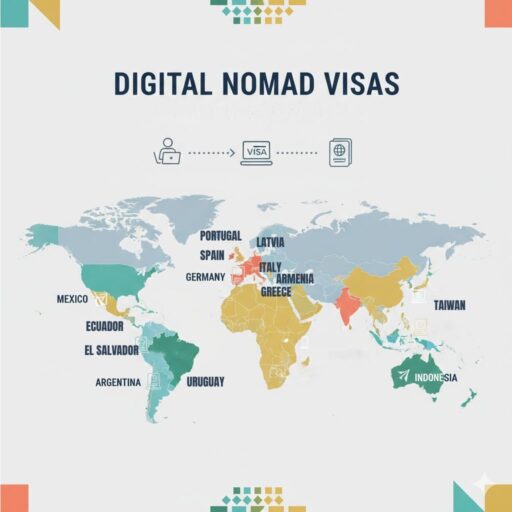
Europe: Countries like Portugal, Spain, Germany, Greece, Italy, and Latvia offer structured pathways from a digital nomad or freelancer visa to permanent residency and eventually citizenship.
Timelines usually range from 5–10 years, with requirements including language proficiency, civic/integration tests, and consistent tax compliance.
Europe provides strong legal frameworks and long-term stability but can be more expensive and bureaucratically strict.
Latin America: Mexico, Uruguay, Argentina, and Brazil offer some of the fastest naturalization options for remote workers, with citizenship achievable in 2–5 years.
These countries often have flexible residency rules, less stringent language or civic requirements, and a lower cost of living.
The lifestyle and community benefits make them attractive for long-term nomad settlement.
Asia-Pacific: Options like Taiwan’s Gold Card provide structured routes—3 years to permanent residency and 5 years to citizenship—while visas like Indonesia’s B211A allow short-term stays but require transitioning to a long-term residence permit for citizenship.
Asia generally has fewer formal nomad visas, and eligibility often focuses on skilled workers, entrepreneurs, or investors, making the process more complex.
Key Insight: Europe offers legal clarity and security, Latin America offers speed and flexibility, and Asia provides selective opportunities for skilled professionals with longer, more complex pathways to citizenship.
What Are the Benefits of a Digital Nomad Visa?
Digital nomad visas allow remote workers to work and legally live abroad while enjoying longer stays and local benefits.
- Legal remote work status: You aren’t working on a tourist visa, which could violate immigration rules in many countries.
- Longer stays (usually 6–24 months): Much better than the usual 30–90 day tourist limits.
- Better access to local services: Including opening bank accounts, signing leases, and often getting local healthcare.
- Integration opportunities: Living in the country allows deeper cultural, social, and professional experiences.
- Tax planning opportunities: Some countries offer favorable tax rules for digital nomads.
What Are The Disadvantages of A Digital Nomad Visa?
Digital nomad visas allow you to work abroad legally, but they come with strict requirements, temporary status, and potential tax and legal complications.
- Complex requirements: Income thresholds, paperwork, and legal proof can be burdensome.
- Not a guarantee of residency or citizenship: Most visas expire and do not automatically convert.
- Tax implications: You may face double taxation if rules are not clearly understood.
- Local restrictions: Some visas limit local employment or business activities.
- Moving frequently can disrupt benefits: Such as long-term health insurance or retirement contributions.
Conclusion
Digital nomad visas offer more than temporary freedom; they provide a structured way to live, work, and integrate abroad.
Only select countries turn this lifestyle into a credible path to permanent residency and citizenship.
Success depends on strategic planning, meeting legal and integration requirements, and maintaining long-term commitment.
For remote workers who approach it thoughtfully, a digital nomad visa can become a bridge from flexibility to lasting international stability.
FAQs
Which Country Is Best for a Digital Nomad Visa?
Portugal offers the strongest path to citizenship for digital nomads.
Germany is ideal for freelancers, while Spain and Mexico provide the most favorable lifestyle and cost options.
What Is the Controversy with Digital Nomads?
Digital nomads have sparked controversy for contributing to rising rents and gentrification in popular destinations, exploiting residency rules to minimize taxes, and sometimes drawing local backlash for living temporarily without contributing to the social welfare system.
Critics argue that transient workers can strain infrastructure while providing limited long-term benefits to the community.
What Are the Challenges of Being a Digital Nomad?
Being a digital nomad comes with real challenges, including isolation or loneliness, unreliable internet in some regions, differences in healthcare access, bureaucratic hurdles for visa renewals, and the complexity of managing international taxes.
Pained by financial indecision?

Adam is an internationally recognised author on financial matters with over 830million answer views on Quora, a widely sold book on Amazon, and a contributor on Forbes.