For high-net-worth individuals (HNWIs), the most effective asset protection strategies combine trusts, legal entities, insurance, and estate planning into a layered framework that shields wealth from lawsuits, creditor claims, and regulatory exposure.
As wealth increases, so does exposure to liability. Entrepreneurs, executives, investors, and business owners face heightened risk simply because of financial visibility.
High-value properties, operating businesses, investment portfolios, and personal assets can all become points of legal or financial attack.
Rather than relying on a single protective mechanism, sophisticated strategies isolate risk across multiple layers while maintaining control, flexibility, and long-term adaptability.
This approach ensures that wealth is both protected and portable, capable of withstanding legal, economic, or geopolitical challenges that could otherwise compromise financial security.
Key Takeaways
- Asset protection for HNWIs relies on layered legal and financial strategies, not a single structure.
- Trusts, LLCs, and family entities form the core legal shield protecting high-value assets from creditors and lawsuits.
- Insurance acts as a secondary protection layer, covering risks that legal structures alone cannot eliminate.
- Strategic wealth structuring helps preserve assets across generations.
My contact details are hello@adamfayed.com and WhatsApp +44-7393-450-837 if you have any questions. We also offer bespoke structuring solutions tailored to your situation.
The information in this article is for general guidance only, does not constitute financial, legal, or tax advice, and may have changed since the time of writing.

What are the biggest asset protection risks for high-net-worth individuals?
High-net-worth individuals face greater exposure to litigation, creditor claims, and liability risks because their wealth creates both opportunity and visibility for legal challenges.
The most common risks arise from business ownership, real estate holdings, investment activities, and personal liability exposures.
Even individuals with no direct involvement in litigation-prone industries may face lawsuits related to contracts, partnerships, property disputes, or professional claims.
Several factors contribute to increased risk for wealthy individuals:
- Ownership of high-value real estate or rental properties
- Operating businesses or serving as company directors
- Public visibility as entrepreneurs or executives
- Complex investment portfolios and financial partnerships
- Personal liability exposures such as accidents or negligence claims
Because of these factors, asset protection planning for HNWIs must go beyond basic legal structures.
Wealth protection requires strategically isolating assets so that a claim against one area of wealth cannot easily reach the entire portfolio.
What mistakes do HNWIs commonly make in asset protection planning?
Many wealthy individuals underestimate how vulnerable their assets may be without proper structuring.
Some of the most common asset protection mistakes include:
- Holding high-value assets directly in personal names
- Using a single entity to hold multiple unrelated assets
- Delaying asset protection planning until legal risks appear
- Relying solely on insurance without legal structuring
Asset protection strategies for HNWIs are most effective when implemented proactively, long before any litigation or creditor claims arise.
Once a legal dispute begins, it may become significantly more difficult—or legally impossible—to restructure assets for protection.
| Timing of Planning | Effectiveness | Key Risk |
| Before wealth accumulation | Very strong | Minimal legal challenges |
| Early wealth stage | Strong | Limited exposure |
| After major asset growth | Moderate | Some structuring limitations |
| After litigation begins | Weak | May be legally restricted |
How do wealthy investors protect their investment assets?
Investment structuring plays an important role in asset protection because the way assets are held can significantly influence liability exposure.
Rather than holding investments directly in personal names, many wealthy individuals use legal structures to contain risk and separate investment activities from personal wealth.
Common structuring approaches include:
- Holding investment portfolios through family partnerships
- Using investment LLCs for private equity or venture investments
- Structuring real estate portfolios through property-specific entities
This approach reduces the likelihood that a dispute arising from an investment will expose unrelated personal assets to creditor claims.
Investment structuring can also provide administrative benefits, allowing investors to manage complex portfolios through centralized governance structures.
Why do HNWIs use LLCs for asset protection?
Layered legal entities are one of the most effective ways to protect high-value assets because they separate liability risks from personal wealth.
Entities such as limited liability companies (LLCs), limited partnerships, and holding companies allow individuals to isolate assets into legally distinct structures.
If litigation or creditor claims arise against one entity, the damage is typically confined to that specific structure rather than spreading across the entire asset base.
For example, a wealthy individual who owns multiple real estate properties might place each property in a separate LLC. If one property becomes subject to litigation, the other properties remain insulated.
This approach is often referred to as liability compartmentalization.
Layered entity strategies typically include:
- Separate entities for individual real estate assets
- Holding companies that own operating businesses
- Limited partnerships for family investment portfolios
- Management companies that handle operational activities
The goal is not to hide assets but to legally separate ownership and operational risk, ensuring that liabilities remain contained within clearly defined structures.
Are trusts effective for asset protection?
Trusts play a central role in wealth protection because they can separate legal ownership from beneficial control of assets.
When assets are transferred into a properly structured trust, they may no longer be considered part of the individual’s personal estate.
This separation can provide protection from certain creditor claims while also supporting estate planning and long-term wealth preservation.
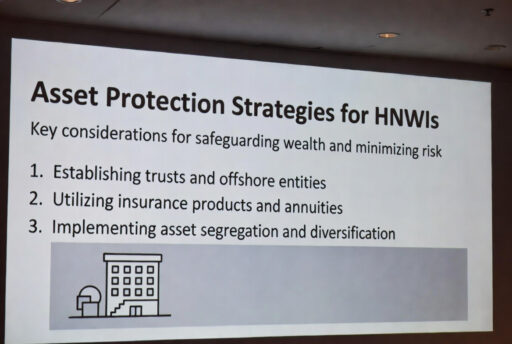
Common trust structures HNWIs use to protect wealth include irrevocable trusts, asset protection trusts, and dynasty trusts to separate ownership from personal control and shield assets from creditors.
Irrevocable Trusts
Irrevocable trusts transfer assets out of the grantor’s personal ownership. Because the grantor relinquishes direct control, these trusts can offer strong protection against future creditor claims.
Asset Protection Trusts
Some jurisdictions allow specialized trusts designed specifically to shield assets from creditors. These structures must be established well before any legal disputes arise to remain effective.
Dynasty Trusts
Dynasty trusts are designed to preserve family wealth across multiple generations while minimizing estate taxes and protecting assets from beneficiaries’ creditors.
While trusts can be powerful tools, they must be structured carefully to ensure compliance with legal and tax requirements.
Poorly designed trusts may fail to provide the intended level of protection.
Why do wealthy individuals use umbrella insurance?
Wealthy individuals use umbrella insurance to extend liability coverage beyond standard policies, protecting personal wealth from large lawsuits or claims that exceed primary insurance limits.
Insurance provides a critical financial buffer that complements legal asset protection structures.
Even the strongest legal frameworks cannot prevent every lawsuit or liability event, and insurance helps absorb financial shocks that might otherwise threaten personal wealth.
Umbrella liability policies are particularly valuable for high-net-worth individuals because they provide additional layers of coverage above home, auto, or other primary policies.
This extended coverage can protect against major liability claims such as accidents, property damage disputes, or personal injury lawsuits.
High-net-worth individuals often combine umbrella coverage with other specialized insurance policies designed to protect both professional and personal exposure.
Key insurance strategies commonly used include:
- Umbrella liability insurance that extends coverage beyond standard policies
- Directors and officers (D&O) insurance for corporate leadership roles
- Professional liability insurance for specialized professions
- High-value property insurance covering luxury homes, collectibles, and art
For wealthy individuals, insurance is not merely a defensive measure but a strategic layer that protects liquidity and prevents legal disputes from escalating into wealth-eroding financial events.
| Protection Layer | Purpose | Example Tools |
| Legal Structures | Separate ownership from liability | Trusts, LLCs, LPs |
| Asset Segmentation | Isolate risk between assets | Property-specific entities |
| Insurance Coverage | Absorb unexpected liability | Umbrella, Directors and Officers insurance |
| Estate Planning | Preserve wealth across generations | Family trusts, Family Limited Partnerships |
| Jurisdiction Strategy | Reduce regulatory or legal exposure | Offshore structures |
Why is estate planning important for high-net-worth families?
Estate planning is not only about transferring wealth after death. For high-net-worth individuals, it is also a crucial component of long-term asset protection.
Proper estate planning structures help ensure that wealth passes efficiently to heirs while minimizing legal disputes, creditor risks, and unnecessary tax burdens.
Effective estate protection strategies often include:
- Family trusts to manage generational wealth
- Structured gifting strategies to gradually transfer assets
- Family limited partnerships to maintain centralized management
- Governance frameworks for family businesses
These tools allow families to maintain continuity and control over significant wealth while protecting assets from fragmentation, disputes, or external claims.
Final Thoughts
Long-term wealth protection requires strategies that evolve alongside changing legal, financial, and regulatory environments.
As wealth structures grow more complex, maintaining resilience becomes as important as building protection in the first place.
Forward-looking planning focuses on maintaining clarity, governance, and adaptability within wealth structures.
This includes ensuring that entities, trusts, and investment vehicles remain aligned with evolving legal standards while continuing to serve their original protective purpose.
Ultimately, resilient asset protection for HNWIs depends on thoughtful structuring, disciplined oversight, and long-term strategic planning.
By maintaining strong legal frameworks and regularly evaluating how wealth is organized, individuals can preserve both financial security and generational continuity in an increasingly complex financial landscape.
FAQs
What is the 3 generation wealth rule?
The three-generation rule suggests that family wealth is often created by the first generation, maintained by the second, and lost by the third due to poor financial discipline and planning.
What are common wealth mistakes?
Common mistakes include lack of diversification, failing to plan for taxes and succession, excessive lifestyle spending, and delaying estate planning.
How do millionaires protect their assets?
Millionaires typically use diversification, trusts, insurance structures, and offshore entities to separate ownership and reduce legal or creditor exposure.
How do rich people protect their money in banks?
Wealthy individuals often spread funds across multiple banks and jurisdictions, use custodians, and structure accounts through trusts or corporate entities.
What are the best investment strategies for high-net-worth individuals?
HNWIs typically focus on global diversification, alternative investments, tax-efficient structures, and long-term wealth preservation strategies.
Pained by financial indecision?

Adam is an internationally recognised author on financial matters with over 830million answer views on Quora, a widely sold book on Amazon, and a contributor on Forbes.