For HNW expats comparing private banks, Singapore, Hong Kong, and Dubai stand out for their established wealth management platforms, international investment access, and cross-border banking services.
Each offers a different proposition, from Singapore’s Asian wealth management network and Hong Kong’s access to Greater China to Dubai’s Middle Eastern reach and UAE tax environment.
Key Takeaways
- Singapore offers a mature private banking ecosystem with strong Asian and global investment access.
- Hong Kong provides particularly strong connections to Greater China and Asian markets.
- Dubai combines international private banking, Middle Eastern access, and no UAE personal income tax.
- Private banking thresholds range from US$2 million to US$5 million, with Dubai's AED7 million benchmark.
My contact details are hello@adamfayed.com and WhatsApp +44-7393-450-837 if you have any questions.
The information in this article is for general guidance only. It does not constitute financial, legal, or tax advice, and is not a recommendation or solicitation to invest. Some facts may have changed since the time of writing.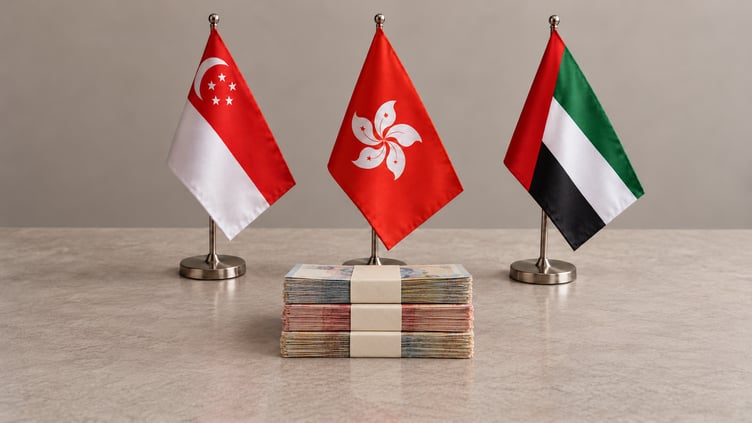
Why private banking location matters for HNW expats
The jurisdiction where an expat maintains a private banking relationship can influence the investment products, currencies, financing options, wealth structuring services, and cross-border support available to them.
For internationally mobile clients, location also matters because banking regulations and tax rules may differ from those in the country where they are resident.
Singapore, Hong Kong, and Dubai each have well-established financial sectors, but their strengths differ:
|
Factor |
Singapore |
Hong Kong |
Dubai |
|
Regional focus |
Southeast Asia and Asia-Pacific |
Greater China and Asia |
Middle East and wider international markets |
|
Banking ecosystem |
Strong local and international banks |
Major Hong Kong, Chinese, and international banks |
UAE-based and international banks |
|
Investment access |
Asian and global markets |
Greater China, Asian, and global markets |
Middle Eastern and international markets |
|
Key regulatory environment |
MAS-regulated financial sector |
Hong Kong financial regulatory framework |
UAE and DIFC financial frameworks |
|
Tax consideration |
Generally no personal capital gains tax |
Generally no capital gains tax |
No personal income tax |
|
Particularly relevant for |
Clients with Asian investment interests |
Clients with China or Greater China exposure |
Clients with Middle East interests or UAE tax residence |
For an HNW expat, the jurisdiction should be assessed alongside the actual bank.
A bank's international network, investment platform, lending capabilities, and experience with clients from the same country can be just as important as the jurisdiction itself.
Which private bank is considered the best in Dubai?
Top private banking options for HNW expats in Dubai include Emirates NBD Private Banking, First Abu Dhabi Bank (FAB), HSBC Global Private Banking, Standard Chartered Private Bank, and UBS.
- Emirates NBD Private Banking – Strongest local angle, with access to the UAE's largest banking network and private banking services spanning investments, financing, and wealth planning.
- First Abu Dhabi Bank (FAB) – A major UAE institution with particular strength in corporate, investment, and private banking, making it relevant to entrepreneurs and business-owning HNW clients.
- HSBC Global Private Banking – Suited to clients with complex international banking needs, supported by HSBC's presence across major global financial centres and its cross-border wealth management platform.
- Standard Chartered Private Bank – Particularly relevant for expats with Asia-Middle East connections, given the bank's established presence across both regions and its focus on internationally connected clients.
- UBS – A major global wealth management specialist, with capabilities spanning investment management, wealth planning, private markets, lending, and other services for HNW and ultra-HNW clients.
Dubai can be particularly relevant for entrepreneurs, business owners, investors, and expats whose financial and business interests are concentrated in the Middle East.
The UAE's lack of personal income tax can also be an important consideration for individuals who are genuinely tax resident there.
Which private bank in Singapore is considered the best?
For HNW expats in Singapore, DBS Private Bank, Bank of Singapore, UOB Private Bank, OCBC, HSBC Global Private Banking, J.P. Morgan Private Bank, and UBS are among the top options.
- DBS Private Bank – A strong choice for clients seeking Singapore and broader Asian market access, with investment capabilities spanning multiple international markets. DBS states that its standard minimum Assets Under Management requirement for Private Bank is US$5 million from January 2026, although the bank may communicate a different amount to individual clients.
- Bank of Singapore – The private banking arm of OCBC Group, with a focus on wealth management for HNW and ultra-HNW clients across Asia, including investment management, wealth planning, and family office services.
- UOB Private Bank – Particularly relevant for clients with Southeast Asian interests, supported by UOB's established regional network and wealth management capabilities across key Asian markets.
- OCBC – Offers private banking and wealth management through its broader banking ecosystem, with strengths in Singapore, Greater China, and Southeast Asia and access to investment, financing, and wealth planning services.
- HSBC Global Private Banking – A suitable option for expats who need cross-border banking and investment services, particularly those maintaining assets, businesses, or financial relationships across several countries.
- J.P. Morgan Private Bank – Focuses heavily on global investment management, capital markets, lending, and wealth planning, making it relevant to clients with complex and internationally diversified portfolios.
- UBS – A global wealth management specialist offering investment management, private markets, lending, and succession planning for HNW and ultra-HNW clients.
Singapore maintains strict financial sector regulation and anti-money-laundering requirements.
Private banking clients should expect detailed checks on their identity, source of wealth, source of funds, tax residence, and intended account activity.
Which private bank is the best in Hong Kong?
For HNW expats in Hong Kong, HSBC Global Private Banking, Standard Chartered Private Bank, Bank of China (Hong Kong), Hang Seng Private Banking, J.P. Morgan Private Bank, and UBS are among the top options, with different strengths in Greater China, Asian markets, and global wealth management.
- HSBC Global Private Banking – A strong option for clients seeking Hong Kong, Greater China, and international investment access. HSBC's Hong Kong private banking offering currently states a minimum assets under management threshold of US$2 million at relationship level.
- Standard Chartered Private Bank – Particularly relevant to clients with Asia-Middle East connections, with an established presence across both regions and capabilities covering investment management, financing, and wealth planning.
- Bank of China (Hong Kong) – Offers particularly strong Mainland China and Greater China connectivity, making it relevant to clients with Chinese business interests, regional assets, or investment exposure.
- Hang Seng Private Banking – A Hong Kong-based option with strong local market knowledge and access to Hang Seng Bank's wider financial services, including investment, financing, and wealth management.
- J.P. Morgan Private Bank – Focuses on global investment management, capital markets, lending, and wealth planning, making it suitable for clients whose portfolios extend well beyond Asia.
- UBS – A global wealth management specialist with capabilities across investment management, private markets, lending, and succession planning, suited to HNW and ultra-HNW clients with complex international portfolios.
Hong Kong's position as an international financial center gives expats access to both regional institutions with strong China and Asia connections and global private banks with broader investment networks.
For internationally mobile clients, however, the bank's ability to maintain the relationship as circumstances change is an important consideration.
A client moving from Hong Kong to Singapore, Dubai, Europe, or another jurisdiction may face changes to account eligibility, available products, or servicing arrangements.
How much do you need for private banking in Singapore, Hong Kong and Dubai?
Private banking requirements vary by institution, with current examples ranging from US$5 million in Singapore and US$2 million in Hong Kong to AED7 million in Dubai.
Private banks generally assess Assets Under Management (AUM), investable assets, total relationship value, and the client's overall financial profile rather than applying one universal wealth requirement.
Singapore
DBS Private Bank states a standard minimum AUM requirement of US$5 million from January 2026, although the bank notes that a different amount may be communicated to an individual client.
The threshold reflects DBS' focus on clients with substantial investable wealth and is separate from the lower entry requirements that may apply to other wealth management or priority banking services.
Hong Kong
HSBC Global Private Banking currently states a US$2 million minimum AUM threshold at relationship level for its Hong Kong private banking offering.
This makes the stated HSBC threshold lower than the current DBS Private Bank minimum in Singapore, although the two figures are based on different institutions and should not be treated as a direct market-wide comparison.
Dubai
Emirates NBD's Signature package requires at least AED7 million in deposits or investments, subject to the bank's eligibility criteria.
The figure applies to a specific Emirates NBD banking package, illustrating how Dubai banks may use deposits and investments held with the institution as part of their eligibility criteria rather than relying solely on a private banking AUM threshold.
HNW expats should also distinguish net worth from investable wealth.
Someone may have a high net worth because of property, a private company, or other illiquid assets while having substantially less capital available for investment management.
For this reason, the headline minimum is only one part of the comparison.
The amount a client needs to qualify, the assets the bank will accept, and the services available at that level should all be checked directly with the institution.
Tax and regulatory considerations for HNW expats
For HNW expats comparing private banks in Singapore, Hong Kong, and Dubai, the main tax differences are capital gains, personal income tax, estate taxes, and international account reporting.
Singapore
Singapore generally does not tax capital gains from personal investments, although gains from activities considered trading can be taxable.
It also abolished estate duty for deaths occurring on or after 15 February 2008.
For HNW expats, Singapore's tax treatment can therefore be relevant when managing investment portfolios and planning the transfer of wealth.
Hong Kong
Hong Kong generally does not impose capital gains tax, although profits considered revenue rather than capital can be taxable.
Estate duty was abolished for deaths occurring on or after 11 February 2006.
Hong Kong also participates in the Common Reporting Standard (CRS) framework, which is relevant to expats holding financial accounts and investments there.
Dubai and the UAE
The UAE does not levy personal income tax on individuals, giving Dubai a different tax environment from Singapore and Hong Kong.
However, a Dubai private bank account does not remove tax obligations in another country.
An expat's tax residence, citizenship-based tax rules, investment income, and business interests can still determine their liabilities.
The UAE also participates in CRS and exchanges relevant financial account information with participating jurisdictions.
Conclusion
Private banking becomes increasingly valuable when an expat's financial life spans multiple countries, currencies, and asset types.
That also makes continuity important. Changing residence, selling a business, receiving an inheritance, or moving assets between jurisdictions can all affect an existing banking relationship.
HNW expats should approach private banking as a long-term relationship rather than simply an account opening decision.
Before committing, it is worth understanding how the bank handles major changes in circumstances, who will manage the relationship, and how readily the client can access specialist support as their wealth structure evolves.
FAQs
Which Singapore banks allow foreigners to open accounts?
Foreigners can open accounts with banks such as DBS, OCBC, UOB, and HSBC, subject to each bank's eligibility, residency, and documentation requirements.
Can I open a bank account in Hong Kong as a foreigner?
Yes. Foreigners can open bank accounts in Hong Kong, although banks apply their own eligibility and documentation requirements.
For example, HSBC's current account-opening information specifically provides requirements for non-HKID holders.
Can I open a bank account in the UAE if I don't live there?
Yes, some UAE banks allow non-residents to open accounts, particularly savings and certain specialized accounts, although eligibility, account features, and documentation vary by bank and applicant.
Related Articles
- International Financial Planning: Key Insights on Global Wealth Optimization
- The Best International Financial Advisors: What They Do and How to Find Them
- Offshore Banking vs Relationship Banking: What’s the Difference?
- What is the difference between offshore banking and traditional banking?
- Family Office Vs Private Banking