Expats planning inheritance across multiple countries can seek help from international private client law firms, estate and tax specialists, and cross-border wealth advisers to address the legal and financial aspects of passing on wealth.
International law firms such as Loeb & Loeb, CMS, Proskauer and Faegre Drinker advise on cross-border estates, trusts and succession laws, while Adam Fayed helps internationally mobile individuals with the investment and wealth management aspects of inheritance planning.
For expats with substantial international assets, this can involve coordinating legal arrangements with decisions about how investments are held, managed and eventually passed to beneficiaries.
The choice of provider will reflect the jurisdictions involved, the complexity of the estate and whether the priority is legal succession, tax planning or preserving family wealth across generations.
The firms are included for comparison, not as a ranking or endorsement. Some inheritance arrangements may require legal, tax and wealth management specialists working together.
Key Takeaways
- Expats should establish who coordinates legal, tax, and wealth management advice before engaging a firm.
- Expats should establish who coordinates legal, tax, and wealth management advice before engaging a firm
- International wills, forced heirship, and tax rules require jurisdiction-specific advice.
- Published fees are limited, and the cost of cross-border planning varies with the estate's complexity and the jurisdictions involved.
My contact details are hello@adamfayed.com and WhatsApp +44-7393-450-837 if you have any questions.
The information in this article is for general guidance only. It does not constitute financial, legal, or tax advice, and is not a recommendation or solicitation to invest. Some facts may have changed since the time of writing.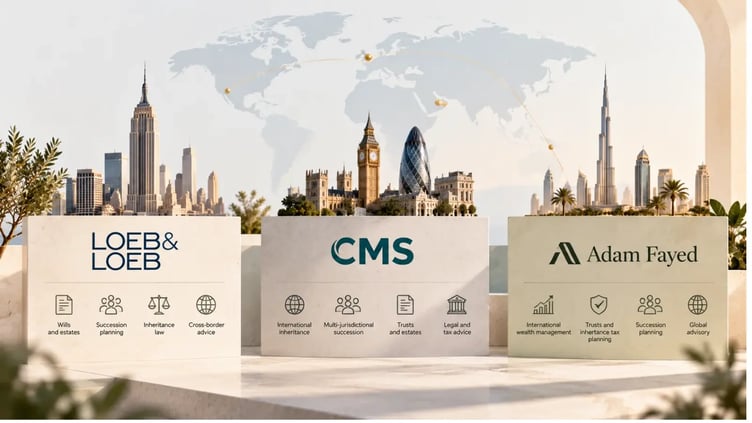
Which firms help expats plan inheritance when assets and beneficiaries are in different countries?
Firms that help expats with cross-border inheritance planning include Adam Fayed, Loeb & Loeb, CMS, Proskauer and Faegre Drinker, offering services spanning estate and succession planning, international wealth structuring, trusts and tax considerations.
1. Adam Fayed - International wealth and succession planning
Adam Fayed works with expats, high-net-worth individuals, and internationally mobile families on wealth management, investment planning, global wealth structuring, and broader expat inheritance planning needs.
His approach connects the management and preservation of international assets with longer-term inheritance and wealth transfer objectives. Where legal or tax expertise is required, planning can involve specialist professional partners, helping families address different aspects of cross-border succession.
- Main strength: Connecting international wealth management, asset structuring, and intergenerational wealth transfer planning, with access to specialist legal and tax expertise through professional partners.
- Costs: Published information states that investment-related costs typically range from 0.5% to 2.5% annually. Standalone consultations generally start at US$1,500, depending on scope and complexity. These figures are not specific quotes for inheritance planning.
- Key considerations: His wealth management services do not replace legal advice on wills, succession rights, trusts, or inheritance tax rules in specific jurisdictions. Confirm which services are provided directly and which involve external partners.
2. Loeb & Loeb LLP - International trust and estate law
Loeb & Loeb advises US citizens and residents, foreign nationals with US connections, and international families on estate planning, trusts, and cross-border tax issues.
Its practice is particularly relevant when US assets, US tax exposure, or inheritances from overseas relatives complicate an estate.
- Main strength: US estate and gift tax planning for international families, including coordination with counsel in other countries.
- Costs: Loeb & Loeb does not publish a standard fee schedule for international estate planning. Fees are agreed based on the scope and complexity of the engagement, and the firm uses alternative fee arrangements in some matters. Prospective clients should request an estimate for their specific inheritance-planning needs.
- Key considerations: Its published international estate planning practice is strongly focused on US-related tax and legal issues. Families without a US connection should confirm whether the firm's expertise fits their needs.
3. CMS - International private client law and succession planning
CMS advises high-net-worth individuals, entrepreneurial families, and family offices on national and international wealth, succession, and estate planning.
Its services include wills, inheritance agreements, forced heirship, trusts, foundations, estate administration, and inheritance tax advice and planning.
- Main strength: Addressing succession and wealth planning issues across different legal systems, including forced heirship and international family arrangements.
- Costs: CMS does not publish one firm-wide rate for international private client work. Fees generally depend on the relevant office, professionals involved, and scope of the engagement.
- Key considerations: CMS operates through separate member firms and offices, so the countries covered, applicable fees, and scope of advice must be checked with the specific team.
4. Proskauer Rose LLP - International private client and multinational family planning
Proskauer's International Private Client Services group handles complex estate and tax planning for wealthy multinational families.
Its work includes planning for non-US families investing in or relocating to the US, as well as US families investing, living, or working overseas.
- Main strength: Coordinating US inbound and outbound estate planning with international tax, trust, reporting, and compliance requirements.
- Costs: Proskauer does not publish a verified standard fee schedule for international inheritance planning. For context only, a June 2026 bankruptcy court filing reported hourly rates of US$1,825–US$1,955 for partners and US$1,110–US$1,775 for associates, effective November 1, 2025, in a specific bankruptcy engagement. These figures relate to bankruptcy work, not estate planning, and should not be taken as representative of the firm's inheritance planning fees.
- Key considerations: Its international private client practice has a strong US legal and tax focus, so families whose inheritance matters primarily involve other countries may need additional local counsel. Confirm which jurisdictions the firm can advise on directly and where coordination with external advisers is required.
5. Faegre Drinker - International estate planning and wealth transfer structures
Faegre Drinker advises wealthy international families on preserving, managing, and transferring wealth across generations.
Its practice includes cross-border legal and tax issues, family offices, private trust companies, and foundations, making it relevant to estates involving business interests or sophisticated wealth structures.
- Main strength: Structuring multigenerational wealth transfers involving family businesses, trusts, foundations, and family offices.
- Costs: Faegre Drinker does not publish standard fees for international inheritance planning. For reference, a July 2023 bankruptcy court filing disclosed hourly rates of US$920–US$1,095 for partners and US$580–US$735 for associates and counsel assigned to that matter. These historical rates concern bankruptcy work and should not be interpreted as representative of the firm's current estate planning fees.
- Key considerations: Its sophisticated structuring capabilities may be more than an expat needs for a straightforward estate. Confirm the firm's experience in each relevant jurisdiction and whether local counsel will be required.
Who Will Manage the Wealth You're Planning to Pass On?
Inheritance planning involves more than legal documents. How your international investments are structured, managed and preserved also matters when preparing to transfer wealth to the next generation.
Discuss Your Wealth Planning OptionsHow to choose an international estate planning firm
Choose an international estate planning firm with experience in the countries governing the estate, expertise in cross-border succession and tax issues, and a clear process for coordinating local legal advice.
An international presence alone does not guarantee that a firm can advise on every country's inheritance laws.
Experience With the Countries Involved
Start by identifying where the assets are held, which countries' laws may govern succession, and where the beneficiaries live, particularly when the estate involves multijurisdictional beneficiaries.
For example, a family with property in France, investments in the United States, and beneficiaries in Singapore may need advice from professionals in several jurisdictions.
Ask which countries the firm can advise on directly and where it relies on local counsel.
Clarify who coordinates the advice and resolves conflicting legal or tax recommendations.
Legal Succession Rules and International Wills
Check whether the firm can address the validity and interaction of wills across jurisdictions, local succession restrictions, and the treatment of specific assets.
A will recognized in one country may not automatically determine how assets are distributed in another.
Ask whether separate wills are advisable, how they will interact, and whether one document could unintentionally revoke another.
Property ownership and local registration rules may also affect how an estate is transferred.
Inheritance Tax Across Jurisdictions
Choose a firm that can assess potential inheritance, estate, and gift tax exposure across the relevant countries, either directly or with specialist tax advisers.
The applicable rules may depend on the deceased's residence or domicile, the location of the assets, and the beneficiaries' circumstances.
Ask how the firm identifies potential tax liabilities, double taxation issues, and reporting obligations.
A structure that reduces tax exposure in one country may create additional liabilities or compliance requirements elsewhere.
Trusts, Foundations, and Other Succession Structures
Assess whether the firm can recommend and implement appropriate structures, such as trusts or foundations, while accounting for their treatment in each relevant jurisdiction.
These arrangements can support wealth transfer and family governance, but their recognition, tax consequences, and administration requirements vary.
Ask what purpose a proposed structure serves, who controls it, who benefits, and what ongoing costs and reporting duties it creates.
Coordination With Wealth Managers and Local Lawyers
Confirm how the firm works with wealth managers, tax advisers, trustees, and lawyers in other countries.
Wealth managers advise on financial assets, lawyers address legal succession, tax specialists assess tax exposure, and trustees administer trusts where appointed.
Before engaging the firm, establish who prepares the legal documents, coordinates the other advisers, implements the plan, and handles future reviews.
Clear responsibilities help prevent gaps and conflicting recommendations.
Fees, Scope of Work, and Ongoing Support
Request a written proposal that identifies the work included, the fee structure, and any additional charges for advice in other jurisdictions.
Confirm whether fees are fixed, hourly, or based on the complexity of the estate, and whether legal drafting, tax analysis, trust administration, and ongoing advice are charged separately.
Ask how the plan will be reviewed and which events trigger an update.
Relocation, marriage, divorce, new property purchases, business sales, and changes in family circumstances can affect whether existing arrangements remain suitable.
Conclusion
International inheritance planning can reveal a mismatch between how a family thinks it owns its wealth and how different countries legally treat those assets.
An investment portfolio, a property, and an insurance policy may each follow different rules when ownership passes to the next generation.
Before engaging an adviser, prepare an inventory of assets by country, including how each is owned, who the intended beneficiaries are, and whether existing wills or beneficiary nominations cover them.
Use that inventory to identify which jurisdictions require legal or inheritance tax advice, and whether separate professionals need to coordinate the arrangements.
Review the plan whenever you relocate, acquire assets abroad, or your beneficiaries' circumstances change.
FAQs
What type of trust is best for estate planning?
Revocable trusts are often suitable for estate planning when flexibility and continued control over assets are priorities, while irrevocable trusts may suit specific wealth transfer or asset management goals but generally impose greater restrictions.
For expats, the appropriate choice should also account for the trust's recognition and tax treatment in every relevant jurisdiction.
What is the most common inheritance mistake?
One major inheritance planning mistake is assuming that a will prepared in one country will automatically control assets held in every other country.
Expats should verify how local succession rules, asset ownership, and any existing wills interact across the jurisdictions involved.
What are some common pitfalls when estate planning?
Common pitfalls include unexpected tax liabilities, conflicting legal requirements across countries, trusts that receive unfavorable tax treatment, and estate documents that no longer reflect the family's circumstances.
These issues can delay asset transfers, increase costs, or leave beneficiaries with less than intended.
Related Articles
- Financial Planning for Cross-Border Wealth for Expats
- Why Get a Trust Instead of a Will
- Investing an inheritance as an expat
- How do the rich avoid inheritance tax?
- Countries With Inheritance Tax: Highest Rates and Tax-Free Options
- Which Firms Help Expat Business Owners Plan Succession for Their Business and Family Wealth?