
This article will speak about UK National Insurance for expats living in the UK.
We will speak about how much you might need to pay whilst living in the UK, and when can you stop paying national insurance.
Although this article shouldn’t be considered as tax advice, and policies might change, it is correct at the time of writing.
This article will also speak about another issue – British expats that move overseas and wonder whether they should keep paying National Insurance.
In this case, it is sensible as an expat to set up private pensions when you move overseas.
Ideally these should be portable, so that you can take them with you when you move back home or to a third country.
For any questions, or if you are looking to invest, you can contact me using this form, or by using the WhatsApp function below.
For those that prefer visual content, I have summarised my thoughts in the video below:
Introduction
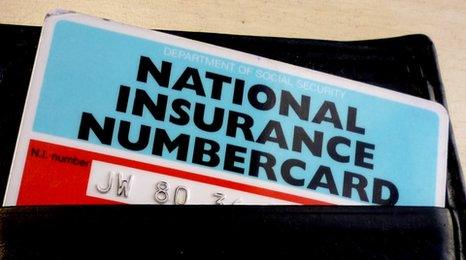
If you are a British expat or you are planning to move to UK, you have to be aware of a National Insurance specifically for foreign people, which mean you have to pay a fixed amount to government insurance from your income, until you reach your retirement age, to be eligible for getting pension.
In this article we will talk about UK National Insurance, discuss it with all the points that an expat must know.
So, you already have an idea that if you want to receive your full UK government pension upon retirement, you need to make enough government insurance contributions to be eligible.
The amount of the pension depends on the “qualifying years”. A qualifying year is 52 weeks with a ‘class’ fee. You will need a minimum of 10 years for any pension and 35 years for a full pension.
These contributions are accumulated through different ‘Classes’;
- Class 1 for UK employees
- Class 2 for the self-employed
- Class 3 to make voluntary contributions
As an expat, you are unlikely to contribute to these “classes” as you will not receive income from work or self-employment in the UK (property income does not count). To ensure that you reach 35 years of service and receive your full basic state pension, you can make a voluntary contribution that will add to these “years”.
The UK Basic Government Pension is designed to provide a person with a basic level of income after retirement. It is funded on a pay-as-you-go basis.
This means that there is no core fund from which to pay retirement benefits later, and the current working population’s National Insurance Contributions (NICs) are used to pay state pensions to those who have reached state retirement age.
The purpose of paying voluntary national insurance contributions is to secure entitlement to various UK National Insurance benefits like basic State Pension.
It has agreements with Reciprocal Agreement Countries and European Economic Area (EEA) regarding special benefits. If you continue paying UK National Insurance while living abroad, you may protect your entitlement to the following:
- A full State Pension
- Particular state benefits in EEA (European Economic Area) as well as some reciprocal agreement countries
- Particular state benefits and stipends on your return to the UK
So the target audience is UK-domiciled expats, (the country that a person treats as their permanent home, or lives in and has a substantial connection with) who have worked previously in the UK and have since left to work/live overseas. Specifically (focusing on the “new State Pension”):
- Men born on or after 6th April 1951
- Women born on or after 6th April 1953
More about National Insurance
So now let’s understand what the National Insurance is and why and how much a UK expat must pay. National Insurance is the UK government’s method of funding the UK state pension.
Most UK-based employees (if over 16 years of age, and earning more than £183 per week) will pay National Insurance automatically as part of the PAYE (Pay As You Earn) process (i.e. the money will disappear automatically, along with income tax, before they receive their net salary).
Paying National Insurance is a result of accumulating the all-important “years” in your National Insurance record. Accumulating 35 years of NI contributions means that you will qualify for a full state pension (at the time of writing this article, currently set at £175.20 per week).
A minimum of 10 years is required to receive a pro-rata portion of that full state pension. For example:
- 10 years of National Insurance contributions: £50 weekly
- 25 years of National Insurance contributions: £125 weekly
The age at which you will start to receive the UK state pension has recently been reviewed by the UK Government, as a result of statistics demonstrating increasing life expectancy for pensioners now, compared with when the state pension was first introduced in 1948.
Following a government review in July 2017, the following changes are being implemented, subject to parliamentary approval;
- If you were born on or before 5 April 1970, no changes are implemented
- If you were born between 6-5 April 1978, your State Pension age is currently 67. It would increase to between 67 years and 1 month, and 68 years, depending on your date of birth
- And if you were born on 5 April 1978, your pension age remains 68
It’s also worth noting that the UK state pension is only increased annually by the highest of price inflation, average earnings growth or 2.5%, if you retire in certain countries such as Austria, Belgium, Czech Republic, Finland, France, Iceland, Italy, etc.
And, it will be frozen at the level you receive in your first year as a pensioner if, for example, you retire in Thailand.
Voluntary National Insurance
It is important that British expats understand the rules in relation to their eligibility to the state pension.
The purpose of paying Voluntary National Insurance contributions is to secure entitlement to various UK National Insurance benefits like the basic State Pension. It has agreements with Reciprocal Agreement Countries and European Economic Area (EEA) regarding special benefits.
Living abroad and not paying UK National Insurance Contributions (NICs) may restrict your access to these benefits – not only now, but also in the future.
If you live abroad, you can continue paying UK Voluntary National Insurance contributions provided specific conditions are satisfied and build up these years.
These payments contribute towards your State Pension and secure particular state benefits, in case you move back to the UK. As mentioned above there are different ‘classes’ that build up part of your national insurance record. There are 4 different classes but for an expat only Class 2 and 3 are relevant.
To qualify for Class 2 NICs, you must have been “ordinarily” employed or self-employed immediately before you went abroad.
Class 2 contributions count towards your state pension when you retire and they entitle you to Employment and Support Allowance and bereavement benefits if and when you return to the UK.
Class 3 contributions can be more expensive and have fewer benefits in that they you won’t be entitled to the Employment and Support Allowance.
Any of the following conditions must be fulfilled in case you want to pay Voluntary National Insurance contributions whilst living abroad.
- You must have spent a constant three-year period in the UK prior to making your payments.
- Before going abroad, you paid National Insurance contributions for a period of three or more years.
You can use either of the following ways to pay voluntary National Insurance contributions;
- Nominate an agent to make your payments.
- Make annual payments.
- Pay through Direct Debit after every 4-5 weeks.
Do UK expatriates generally make National Insurance Contributions (NICs)?
As an expat you may not automatically have to pay UK National Insurance after you leave the country (depending on your employment status and employer, for example), but it may be in your future financial interest to do so.
It entirely depends on where an expat is with their State Pension:
- how many NICs made and
- how much they want to guarantee their UK State Pension when the time comes
Having a shortfall in your NI contributions may make a significant difference to your entitlement to a UK state pension, or any state benefits you could be entitled to should you return to the UK.
Details of National Insurance if are working in the EEA
As already mentioned, you might be able to pay UK National Insurance while you’re working abroad, depending on where you’re working and how long for.
In that way you’ll protect your State Pension and entitlement to other benefits and allowances if you keep paying National Insurance while you’re abroad.
If you work in an EU, EEA or Switzerland country, what you need to do depends on your situation. If you are working in another country due to the coronavirus (COVID-19), continue to pay your Social Security or UK National Insurance contributions as usual, unless otherwise instructed. If you have questions, you can contact the HMRC or the social security agency of the country in which you work.
If you work for an employer in the EEA
Typically, you will pay social security contributions in the EEA country in which you work, instead of public insurance contributions. It means:
- you will be subject to that country’s social security laws and may be eligible for benefits there
- your eligibility for UK benefits (such as a government pension) may be affected because there will be a gap in your government insurance contributions.
You can still get free or preferential treatment in the country where you work.
If your UK employer sends you to work in the EEA
You may be able to continue to pay your National Insurance if you are abroad for up to 2 years. This means that you do not have to pay social security contributions abroad.
You will need a “Portable Document A1” as proof. You or your employer can check if you can get one by filling out Form CA3822. This process can take several weeks if your employer has not previously submitted Form CA3821 to inform HMRC about sending employees overseas.
If you are self-employed in the EEA
You may be able to continue paying for government insurance if you:
- usually self-employed in the UK
- work temporarily abroad (up to 2 years)
If you can, you will not need to pay social security contributions in the country where you work. You will need a “Portable Document A1” as proof. To check if you can get it, fill out Form CA3837 and send it to the address on the form. If you are a director of your own limited liability company, please complete Form CA3822.
If you work in 2 or more EEA countries
You may be able to continue to pay national insurance if you are employed or self-employed in 2 or more EEA countries. If you can, you will not need to pay social security contributions in the EEA countries where you work.
You will need a “Portable Document A1” as proof. You can check if you can get Portable Document A1 or if you need to pay social security contributions overseas instead. How you do this depends on whether you live:
- in the UK – complete Form CA8421i
- in the EEA – contact your country’s social security authority.
Details of NI if you are working in countries with bilateral Social Security agreements
If you start working for an employer in a country with a Reciprocity or Double Contribution agreement (sometimes called “bilateral social security agreements”), you will usually pay social security contributions in that country instead of public insurance.
These countries:
Barbados, Bermuda, Bosnia and Herzegovina, Canada, Chile, Croatia, Guernsey, Israel, Jamaica, Japan, Jersey, Mauritius, Montenegro, New Zealand, North Macedonia, Philippines, Republic of Korea, Serbia, Turkey, USA.
You may be able to continue to pay contributions to the UK rather than the country you were sent to if your UK employer sent you there temporarily. Your employer can verify this by completing Form CA9107. This may affect your eligibility for health care and other benefits – check with your employer for more information.
If you are self-employed
You may be able to continue paying for government insurance if you:
- usually self-employed in the UK
- temporarily work abroad
If you do this, you will not have to pay social security contributions in the country where you work. You can check it by filling out Form CA9107.
Details of NI if working in any other country
If you work for an employer outside the EEA, Switzerland and countries that have signed bilateral social security agreements and fulfill the following 3 conditions, you will continue to pay public insurance for the first 52 weeks of your stay abroad:
- your employer has a UK business
- you usually reside in the UK
- you lived in the UK just before you started working abroad
If you are self-employed
You do not need to pay Class 2 National Insurance, but you can continue to pay it if you want to protect your state pension and eligibility if you meet certain conditions. Contact HMRC to see if you are eligible.
If your circumstances have changed while abroad you can contact HMRC quoting your National Insurance number and tell them what change has occurred and when it happened.
For example, if living abroad and you are a woman, you should tell HMRC if you get married or become divorced or widowed.
If you move house while abroad, you need to tell HMRC when you move and where you moved to. If you do not tell them when you move, HMRC will not be able to keep your records up-to-date. This means you cannot be contacted if your tax-year National Insurance contributions are not enough to count for benefit purposes.
HMRC would normally write to let you know how much you could pay in voluntary National Insurance contributions to make that year count. When you are nearing State Pension age, HMRC invite you to claim any basic State Pension you are entitled to. HMRC cannot do this if your current address is not up-to-date.
FAQ
- What happens if you do not pay NI?
If you do not pay your National Insurance premiums on time, you may face a fine. You will be fined by the UK Internal Revenue and Customs (HMRC) for failing to pay your monthly, quarterly or annual PAYE UK taxes, Class 1 National Insurance (NIC) premiums, Construction Industry Scheme (CIS) or student loans. For a complete list, click here.
If you do not pay for government insurance, you usually receive a notice of the estimate of the penalty, after which you have 30 days to pay it. HMRC will inform you in detail about missed payments and penalties, how to pay them, and what to do if you wish to appeal the decision.
Your notification letter will include a unique identifier for each individual penalty.
It is best to pay the penalty in advance as daily interest will be charged on any outstanding amount after the due date. If you do not pay the full amount within six months, you will be charged an additional 5 percent of the unpaid amount.
This amount increases to 5 percent after 12 months if payments remain unpaid. Penalties are charged for both year-end adjustments and amounts due annually or periodically.
- Who pays the national insurance contributions?
Paying government insurance qualifies you for government benefits based on whether you are employed, self-employed, or volunteer.
You must pay for national insurance if you are 16 years old and work in the UK, provided that your earnings exceed a certain level. If you are employed, network cards are automatically deducted from your monthly salary. If you are registered as a private entrepreneur, you will have to issue the network cards yourself.
- Do you need to pay government insurance if you’re not working?
You stop paying national insurance the year you reach UK retirement age, which is based on your birth and gender. Find out more about UK retirement rules and retirement age.
- About your National Insurance Number
Your National Insurance Number (NI number) acts as your personal account or tax number, allowing you to keep track of the amount you deposited and any benefits you are entitled to. You are required by law to apply for an NI number if you start working in the UK or apply for any benefits.
Your NI number will include two letters, six digits and an additional letter such as AA 000000 Z.
If you have children under the age of 16 living in the UK, each child will be automatically enrolled for national insurance and will receive an NI before their 16th birthday. Parents with young children are also eligible for UK Child Support.
You will need to provide your NI number to your employer to ensure that all network cards and taxes you pay are correctly recorded in your account. It also acts as a reference number for accessing any part of the social security system, such as healthcare.
- How to get an NI number?
If you do not already have an NI number, you must apply for one:
- as soon as you start work
- as soon as you or your partner asks for any UK Social Security benefits.
To apply for an NI number, you must be:
- over 16 years old
- official resident of Great Britain (England, Wales or Scotland).
You can apply for an NI number by calling JobCentre Plus NI Allocation Service Helpline at 0845 600 0643. They will first check to see if you need a number and then arrange for you to have an ID interview.
If you are receiving Child Benefit as a parent or guardian, the children you are caring for will automatically receive an NI Card shortly before they turn 16.
- Who is using your NI number?
The only people you should ever give your NI number to are:
- HMRC
- employers
- any Jobcentre Plus if you are applying for Jobseeker’s Benefit
- your local council if you have access to housing benefits.
For many benefits, your eligibility depends on your national insurance premiums (see below which benefits depend on network cards), so you do not have to give your number to anyone.
You will also be prompted to show your NI number when you open an Individual Savings Account (ISA).
Further Reading
What is the best way to save as an expat, in a world of so much choice? The article below speaks about this very subject.



Hi Adam, Thanks for the valuable information. What is your take on people like me (43 year old), who are not UK citizen but have worked in UK for 10 years and paid national insurance. Now I am back in home country. I think paying voluntary contribution will give me decent pension as compared to any pension plan in India. So should I carry on paying around 800 gbp/year. otherwise what i have paid, i cant get back and pension at min 10 years of contribution is not sizable at all. Thanks!!
Hi Vishal – I will email you