The best health insurance for expats in the UAE is one that combines comprehensive medical coverage with access to a broad network of hospitals, whether through an employer-sponsored, local private, or international health insurance plan.
Expats can choose from local insurers like Daman and Sukoon, as well as international providers such as Allianz Care, Cigna Healthcare, and Bupa Global, each offering different levels of coverage and benefits.
Key Takeaways
- Basic health insurance typically costs AED 320–1,500 per year, while comprehensive and international plans cost more.
- Local health insurance suits long-term UAE residents, while international plans offer broader cross-border coverage.
- Daman, Sukoon, Allianz Care, Cigna Healthcare, Bupa Global, and Now Health International are among the popular insurers for expats in the UAE.
- Check that your preferred hospitals and clinics are included in your insurer's provider network across the emirates you use.
My contact details are hello@adamfayed.com and WhatsApp +44-7393-450-837 if you have any questions.
The information in this article is for general guidance only. It does not constitute financial, legal, or tax advice, and is not a recommendation or solicitation to invest. Some facts may have changed since the time of writing.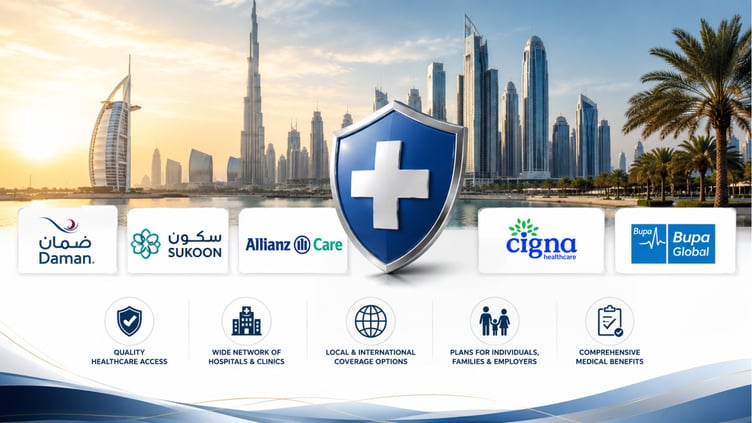
Which is the best health insurance in the UAE for expats?
The best health insurance providers for expats in the UAE include Daman, Sukoon, Allianz Care, Cigna Healthcare, Bupa Global, and Now Health International.
Each offers different levels of medical coverage, provider networks, and international benefits, making them suitable for different healthcare priorities and budgets.
|
Provider |
Indicative cost range* |
What it stands out for |
Main drawback / consideration |
|---|---|---|---|
|
Daman |
AED 1,000–10,500+ |
Large UAE healthcare network and strong local coverage |
Best suited to UAE-based care; international coverage is not the main strength of its basic local plans |
|
Sukoon Insurance |
AED 2,500–15,000 |
Flexible local plans with options for maternity, dental, and international coverage |
Coverage varies considerably by plan, so lower-cost options may provide fewer benefits or a more restricted network |
|
AED 6,500–32,000+ |
International private medical insurance and worldwide coverage options |
Some network tiers exclude major premium hospitals such as Cleveland Clinic Abu Dhabi, American Hospital and Mediclinic facilities |
|
|
AED 5,000–31,000 |
Extensive international network and flexible global coverage |
Comprehensive international cover can become expensive, particularly for families and higher levels of benefits |
|
|
AED 7,500–45,000 |
Premium private healthcare, global specialist access, and high annual limits |
Generally positioned at the premium end of the market, making it less suitable for expats primarily seeking affordable UAE-only cover |
|
|
Now Health International |
From around AED 9,100 per year |
Multiple international coverage tiers and high annual limits |
Lower-cost plans can have significant limits on benefits such as outpatient care; broader coverage requires moving to a higher-tier plan |
Note: *Indicative premiums are broad estimates rather than guaranteed quotes.
Actual costs can vary significantly based on age, location, medical history, coverage area, deductible, benefits, and the number of people covered.
International insurers generally require a personalized quote.
Now Health International, for example, currently lists UAE plans starting from USD 26 per month for its WorldCare Essential plan, while higher-tier plans start at USD 207, USD 272, USD 380, and USD 571 per month depending on the plan.
When comparing health insurance providers, consider:
- Whether the plan complies with the health insurance requirements of your emirate
- Hospital and clinic network, including access across different emirates if you live and work in separate locations
- Whether employer-sponsored coverage is sufficient or supplemental insurance is needed
- Annual coverage limits and covered medical services
- Inpatient, outpatient, maternity, and chronic condition benefits
- International coverage if you travel frequently or expect to relocate outside the UAE
- Coverage for sponsored dependents, including spouses and children
- Waiting periods, exclusions, and pre-existing condition coverage
- Claims process, customer support, and direct billing arrangements
- Premiums, deductibles, and co-payments
What are the healthcare options available for expats in the UAE?
Expats in the UAE can access healthcare through public healthcare facilities, private healthcare providers, employer-sponsored health insurance, or individually purchased private health insurance.
Public healthcare
The UAE operates government healthcare facilities that provide high-quality medical services.
Access for expatriates depends on local regulations, residency status, and eligibility requirements, which may differ between emirates.
Some public facilities may require health cards or charge fees for services provided to non-citizens.
Private healthcare
Private healthcare is the primary choice for many expatriates due to its wide network of hospitals, shorter waiting times, multilingual medical staff, and access to specialist care.
Most private hospitals and clinics accept a broad range of local and international health insurance plans.
Employer-sponsored health insurance
Many employees receive health insurance through their employer.
These plans often satisfy mandatory insurance requirements and cover routine medical care within an approved provider network.
However, employer-sponsored plans may have limitations, such as:
- Restricted hospital networks
- Limited international coverage
- Lower annual benefit limits
- Limited maternity or dental benefits
- No coverage after leaving employment
Individual private health insurance
Expats who are self-employed, retired, entrepreneurs, freelancers, or accompanying family members may purchase their own private health insurance.
Individual policies offer greater flexibility, allowing policyholders to choose coverage levels, provider networks, optional benefits, and international protection based on their personal needs.
How much does basic health insurance cost in the UAE?
Basic health insurance in the UAE typically costs between AED 320 and AED 1,500 per year for an individual, while comprehensive and international plans can cost several thousand dirhams more based on the level of coverage.
Premiums vary according to factors such as the applicant's age, emirate of residence, medical history, insurer, and benefits selected.
In general:
- Basic local health insurance plans are typically the most affordable option.
- Comprehensive local plans generally cost more but provide broader provider networks and additional benefits.
- International health insurance plans are usually more expensive because they provide wider geographic coverage and greater flexibility.
While lower premiums may reduce upfront costs, they may also come with higher deductibles, narrower provider networks, or lower coverage limits.
Should I get international insurance?
International health insurance is worth considering if you travel frequently, expect to relocate after living in the UAE, or want medical coverage that continues across multiple countries.
If you plan to live and receive most of your healthcare in the UAE for the foreseeable future, a local UAE health insurance plan may provide sufficient coverage at a lower cost.
Local UAE health insurance
Advantages
- Generally lower premiums
- Meets UAE health insurance requirements
- Broad access to local hospitals and clinics
- Well suited for long-term UAE residents
Considerations
- Overseas medical coverage may be limited
- Provider networks are typically focused on the UAE
- Coverage may need to be replaced if you relocate to another country
International health insurance
Advantages
- Worldwide medical coverage, subject to policy terms
- Access to a wider network of hospitals and specialists
- Continuity of coverage when relocating internationally
- May include medical evacuation and international assistance services
Considerations
- Higher premiums than most local plans
- Broader coverage than some UAE-based residents may require
- Certain destinations may require optional regional or worldwide coverage upgrades
Can I use my health insurance across all emirates?
Not always. Many health insurance plans provide access to healthcare providers across multiple emirates, but coverage is generally limited to the hospitals and clinics included in your insurer's provider network and policy.
If you live in one emirate and work in another, or regularly travel between emirates, verify that your preferred healthcare providers are included in your plan.
For example, an expat living in Sharjah but working in Dubai may wish to access medical care near both home and work.
Similarly, someone based in Ajman may prefer specialist treatment in Abu Dhabi.
Conclusion
Health insurance is more than a residency requirement for expats in the UAE. It is an important part of protecting your financial well-being.
A policy that aligns with your lifestyle, family circumstances, and future mobility can reduce unexpected medical expenses while ensuring continued access to quality healthcare.
Taking the time to compare coverage, not just cost, can help you choose a plan that remains suitable as your circumstances evolve.
FAQs
Which insurance is mandatory in the UAE?
Health insurance is the mandatory type of insurance for private sector employees and domestic workers in the UAE.
Employers must provide compliant health insurance as a condition for issuing or renewing residency permits, while separate local requirements may also apply to dependents in emirates such as Dubai and Abu Dhabi.
Is it illegal to not have health insurance in the UAE?
Yes. Health insurance is mandatory for private sector employees and domestic workers in the UAE, and failing to maintain the required coverage may affect residency permit issuance or renewal and compliance with applicable UAE or emirate-level regulations.
What is the difference between travel insurance and international health insurance?
Travel insurance provides short-term protection for emergencies during a trip, while international health insurance offers ongoing medical coverage for expatriates living or working abroad.
Unlike travel insurance, international health insurance typically covers routine healthcare, specialist treatment, and long-term medical needs in addition to emergencies.
Related Articles
- Cigna Global vs Bupa Global: Which Is Better for Expats in 2026?
- Choosing the Best Health Insurance for Expat Families Overseas
- Health Insurance for Retired Expats: Best 8 Options for Expats Over 60
- International Health Insurance for Remote Workers Guide
- Does Your Employer Health Insurance Actually Cover You Abroad?
- How the Wealthy Use Life Insurance to Preserve Wealth